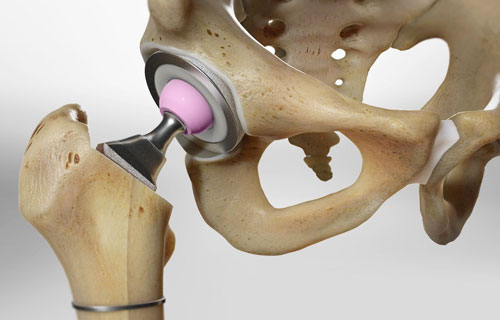
Total Hip Replacement
Total Hip Replacement (THR) is a surgical procedure in which a damaged or diseased hip joint is replaced with an artificial joint. It is recommended for patients suffering from severe hip pain, stiffness, or loss of mobility due to arthritis, injury, or joint degeneration.
The primary aim of total hip replacement is to relieve pain, restore joint function, and improve mobility. This procedure helps patients regain independence and return to daily activities with greater comfort and confidence.
Conditions Treated with Total Hip Replacement
- Osteoarthritis: Degenerative wear and tear of the hip joint causing chronic pain and stiffness.
- Rheumatoid Arthritis: Inflammatory joint disease leading to hip joint damage.
- Hip Fractures: Severe fractures of the hip due to accidents or falls.
- Avascular Necrosis: Loss of blood supply to the hip bone causing bone collapse.
- Post-Traumatic Arthritis: Arthritis developing after hip injuries.
- Congenital Hip Disorders: Structural abnormalities affecting hip joint function.
Key Benefits of Total Hip Replacement
- Effective Pain Relief: Significantly reduces or eliminates chronic hip pain.
- Improved Mobility: Enhances walking ability and joint movement.
- Better Joint Function: Restores stability and flexibility of the hip joint.
- Long-Lasting Results: Modern implants are durable and designed for long-term performance.
- Improved Quality of Life: Enables patients to lead an active and comfortable lifestyle.
- Advanced Surgical Techniques: Minimally invasive approaches support faster recovery.
Procedure Overview
During total hip replacement surgery, the damaged portions of the hip joint are removed and replaced with artificial components made from metal, ceramic, or medical-grade plastic. The new joint is positioned to ensure smooth movement and stability.
Recovery and Rehabilitation
Recovery after total hip replacement involves physiotherapy and gradual rehabilitation to strengthen muscles and improve joint function. Most patients begin walking within a short time after surgery and continue to improve over several weeks to months.
When to Consider Total Hip Replacement
You should seek medical evaluation if you experience:
- Persistent hip pain that affects daily activities
- Difficulty in walking, standing, or climbing stairs
- Hip stiffness or reduced range of motion
- Pain not relieved by medication or physiotherapy
- Reduced quality of life due to hip problems
Timely diagnosis and appropriate treatment can help restore mobility, reduce pain, and improve overall joint health.