Total Knee Replacement
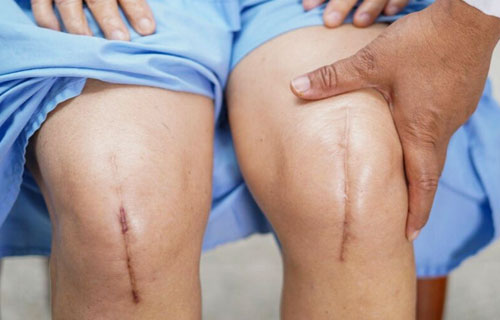
Total Knee Replacement (TKR) is a surgical procedure in which a damaged or worn-out knee joint is replaced with an artificial joint. It is commonly recommended for patients suffering from severe knee pain, stiffness, or loss of mobility due to arthritis or joint damage.
The goal of total knee replacement is to relieve pain, restore joint function, and improve the overall quality of life. This procedure helps patients return to daily activities with better comfort and mobility.
Conditions Treated with Total Knee Replacement
- Osteoarthritis: Degenerative wear and tear of the knee joint leading to pain and stiffness.
- Rheumatoid Arthritis: Chronic inflammation causing joint damage and deformity.
- Post-Traumatic Arthritis: Arthritis developing after knee injuries or fractures.
- Severe Knee Damage: Advanced joint damage that does not respond to medication or physiotherapy.
- Chronic Knee Pain: Persistent pain affecting daily activities and movement.
- Joint Deformity: Bowed or misaligned knees causing difficulty in walking.
Key Benefits of Total Knee Replacement
- Significant Pain Relief: Reduces or eliminates chronic knee pain.
- Improved Mobility: Enhances the ability to walk, climb stairs, and perform daily activities.
- Better Joint Function: Restores stability and range of motion in the knee.
- Long-Lasting Results: Modern implants are designed to last for many years.
- Improved Quality of Life: Enables patients to lead a more active and independent life.
- Advanced Surgical Techniques: Minimally invasive approaches help in faster recovery.
Procedure Overview
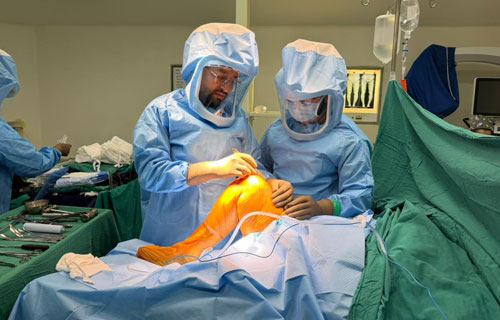
During total knee replacement surgery, the damaged surfaces of the knee joint are carefully removed and replaced with artificial components made of metal and medical-grade plastic. The procedure is performed with precision to ensure proper alignment and smooth joint movement.
Recovery and Rehabilitation
Recovery after total knee replacement involves a structured rehabilitation program that includes physiotherapy and gradual increase in activity levels. Most patients start walking within a short period after surgery and continue improving over the next few weeks to months.
When to Consider Total Knee Replacement
You should consider medical evaluation if you experience:
- Severe knee pain that limits daily activities
- Difficulty in walking, climbing stairs, or standing for long periods
- Persistent swelling or stiffness in the knee
- Pain that does not improve with medication or physiotherapy
- Reduced quality of life due to knee problems
Early consultation and timely treatment can help prevent further joint damage and provide long-term relief from knee pain.